
Magnetic Drive Pump Decoupling When the Motor Runs but Flow Stops
Get Product Catalog & Support
Fill out the form to get full specs and case studies.
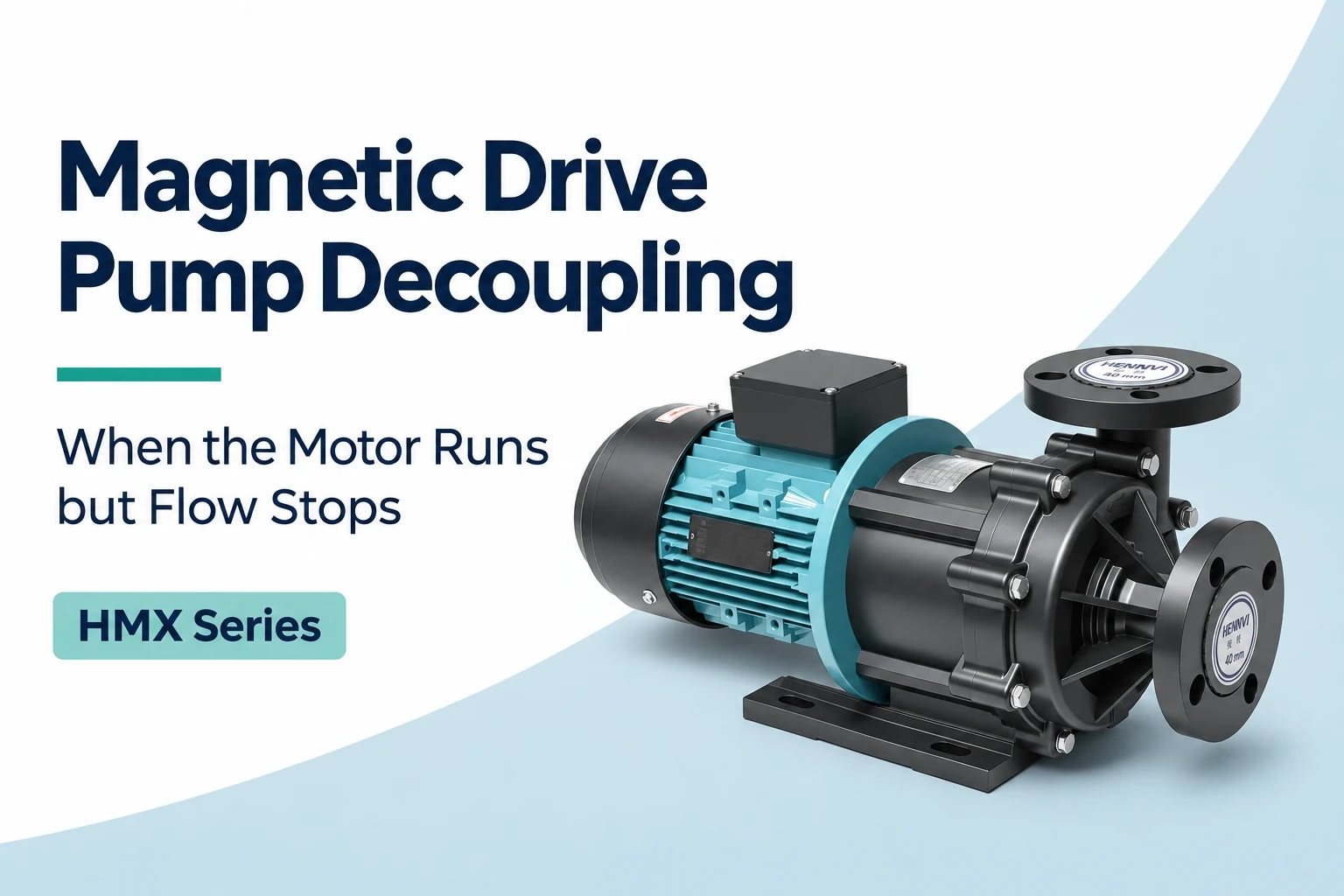
Magnetic drive pump decoupling can cause a sudden loss of flow while the motor is still running. If your HENNVI HMX pump had a steady return to the tank and then stopped delivering liquid, record what happened just before the flow dropped. The most useful details are the tank level, valve positions, motor current, and pressure readings before and after the change.
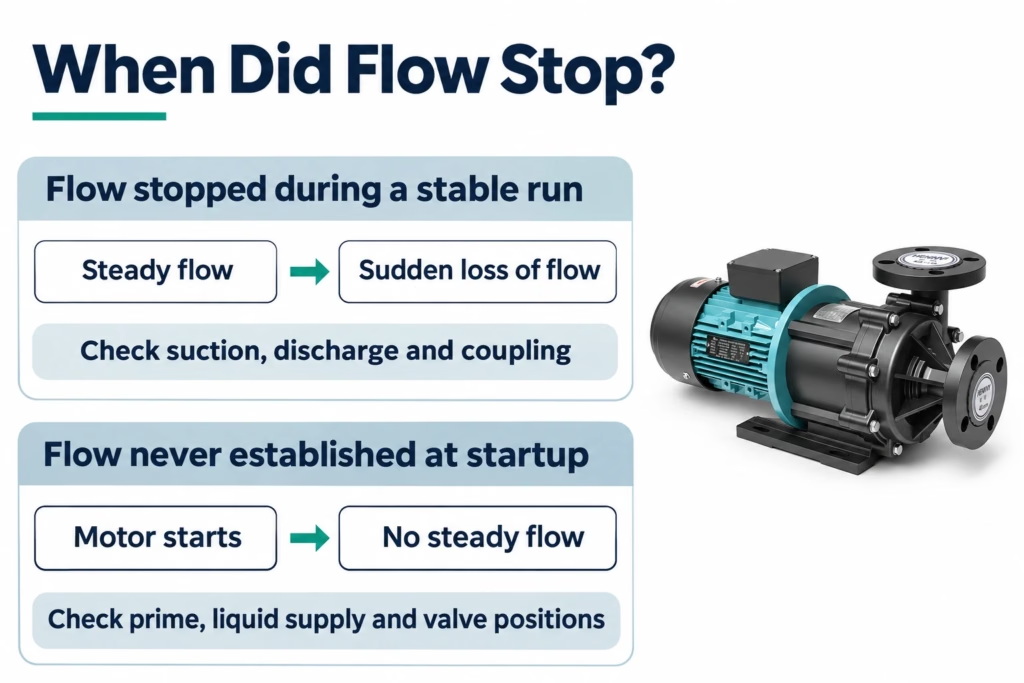
Start with one question: Did the pump establish steady flow before the fault? A pump that loses flow during a stable run gives you a different starting point from a pump that never delivers liquid after startup. That distinction helps you decide whether to investigate the magnetic coupling, the suction supply, or the discharge path.
Table of Contents
ToggleHow Magnetic Drive Pump Decoupling Happens
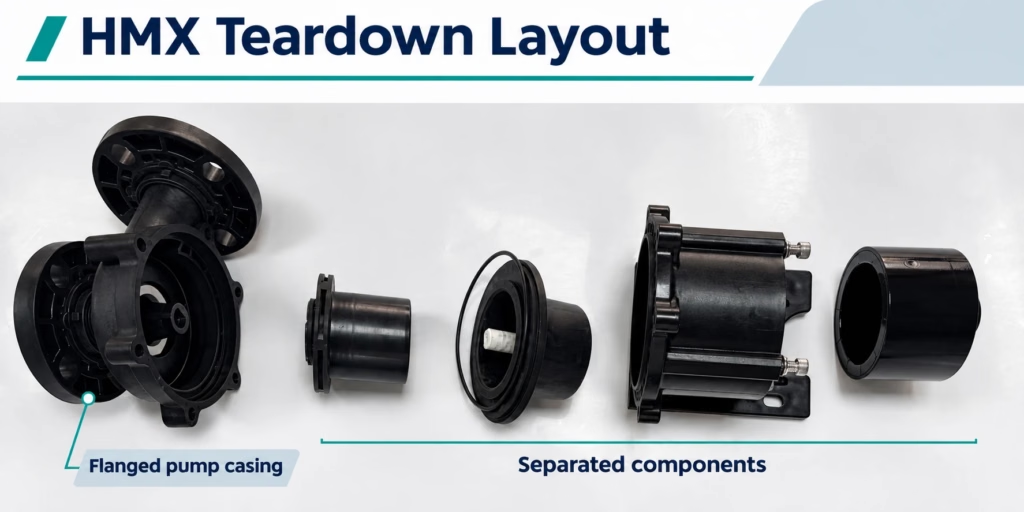
In a magnetic drive centrifugal pump, the motor turns the outer drive magnet. The magnetic field transmits torque across a stationary containment shell to the inner magnet, which drives the impeller. During normal operation, the drive magnet and the driven assembly rotate in sync. Decoupling occurs when the driven assembly loses synchronism. The motor can continue running while the impeller stops delivering useful flow. Iwaki magnetic drive pump instructions
Changes in liquid properties or resistance to impeller rotation can increase the load on the coupling. Ask whether the liquid became more concentrated, whether its temperature changed, or whether recent maintenance could have introduced debris. Also ask whether the event followed a shutdown during which deposits could have formed. Each answer points to a condition worth checking against the installed pump configuration. Finish Thompson centrifugal magnetic drive pump manual
Start With the Timing of the Flow Loss
| What happened | What to investigate first | What to record |
|---|---|---|
| Flow was steady, then dropped sharply while the motor continued running. | Check for a change in the suction supply or discharge path. A sudden drop with a clear flow path also warrants a coupling review. | Last stable flow, tank level, pressure and gauge location, motor current, and any process change just before the event. |
| Flow was weak or absent from the first startup after maintenance. | Check the approved priming procedure, suction liquid supply, valve positions, and any recent electrical or drive work. | What was serviced, whether the pump had been filled according to its instructions, and whether it ever established a steady return. |
| Return flow faded or pulsed as the source tank level fell. | Review loss of prime or recurring air entry. Check the actual liquid level relative to the suction inlet and the arrangement of the suction line. | Tank level when the symptom first appeared, presence of bubbles, and the suction piping layout. |
| Return flow fell after a valve change or filter work, and pressure rose at an upstream discharge gauge. | Review the discharge path for restriction. Identify the gauge position relative to the valve or filter. | Upstream and downstream readings where available, valve positions, and filter condition. |
If the issue follows motor replacement or electrical work, include rotation in the first checks. If it follows falling tank level, start with liquid supply and possible air entry. Those conditions can produce similar no-flow symptoms, so record the sequence before deciding which component to inspect. HENNVI reverse rotation checks · HENNVI guide to loss of prime at low tank level
Read Pressure and Motor Current Together
Start by locating the gauges. A gauge on the pump discharge upstream of a filter describes pressure at that point. If the gauge shows higher pressure while the tank return falls, check what changed downstream of the gauge. This may include a valve position, filter condition, or restriction in the return line. If the loop has a bypass, check whether the observed loss is at the tank return, across the whole pump discharge, or both.
Compare current against the last stable run. Record the frequency or speed with the reading. On a variable-speed system, compare records taken at similar speeds and under similar process conditions. A change in current shows that the motor load changed. Use it with the flow and pressure history to decide what to review next. An isolated current reading cannot confirm that the inner and outer magnets lost synchronism.
Use the last stable operating point as the reference. The flow a centrifugal pump delivers depends on the pump curve and the resistance of the installed system. Filter loading and valve adjustments can change that operating point even when the pump model and motor speed stay the same. Hydraulic Institute guidance on pump and system operating points
What to Verify on the HMX Nameplate
The HMX series is a sealless magnetic drive pump series for chemical liquid circulation. The specification table on page 4 of the HENNVI English catalog shows why the full model number matters. HMX-452 and HMX-452H are both listed with 50 × 40 mm inlet and outlet sizes and 1.5 kW motor output, yet they have separate performance entries. The suffix and operating frequency help identify which performance data to use when reviewing the incident. HENNVI HMX Series specifications
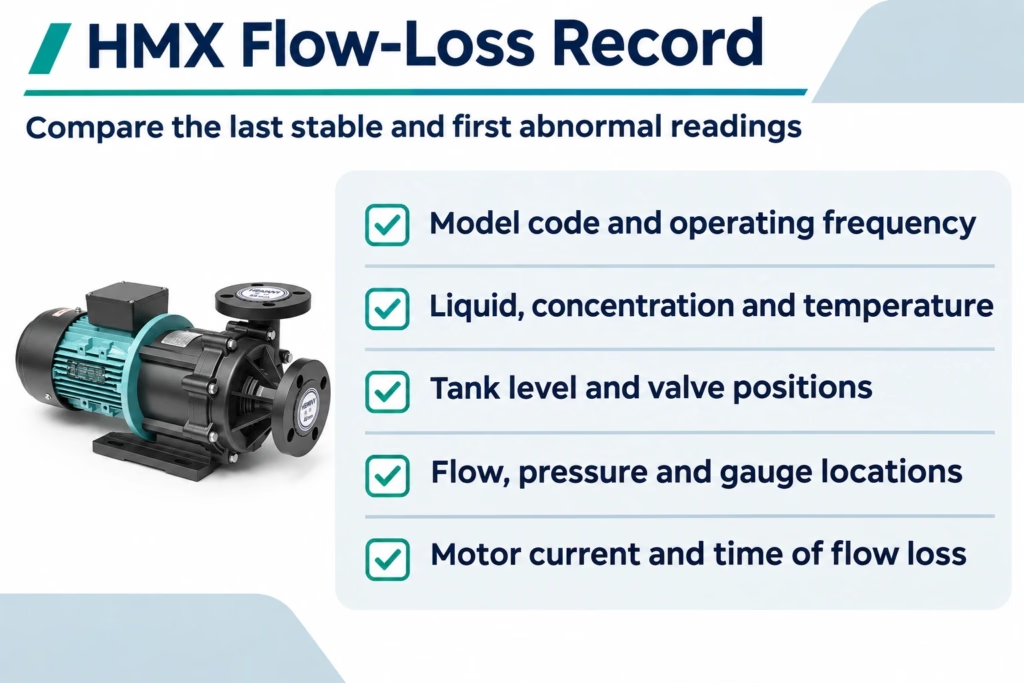
For an HMX review, record the complete model code, the installed frequency, and the liquid in service when the flow stopped. If the line changed from a diluted solution to a more concentrated one, include the concentration and temperature for both conditions. These details help the supplier assess the operating duty and the pump configuration together.
What to Do When Flow Drops to Zero
Gear pumps transport liquid through spaces formed by rotating gears and the surrounding housing. They are among the rotary positive displacement technologies considered for viscous-liquid handling.
Progressive cavity pumps use a rotor and stator to form cavities that move liquid through the pump. They are another technology to evaluate for viscous or solids-containing media.
For either design, provide the actual fluid properties rather than choosing from a general application label. Discuss abrasion, solids, material compatibility, and maintenance with the supplier. NETZSCH’s overview of rotary displacement technologies
Where Do Magnetic Drive Chemical Pumps Fit?
Follow the site’s shutdown procedure if liquid circulation stops unexpectedly or the pump runs abnormally. Preserve any alarm, flow, pressure, or current readings already available. Repeated restarts can erase useful evidence about the first event and leave the cause unresolved.
Before inspection or restart, have qualified personnel verify the liquid supply, intended valve positions, and applicable instructions for the installed HMX unit. If the pump must be opened, follow the plant’s isolation and depressurization procedures for the chemical in service. Use the manufacturer’s instructions for the specific pump when deciding whether an internal inspection is needed. Finish Thompson guidance on suspected decoupling in magnetic drive centrifugal pumps
Frequently Asked Questions
Can the motor still run if a magnetic drive pump decouples?
Yes. The motor can continue turning the outer magnet while the driven assembly loses synchronism. Record the actual discharge or return flow alongside the motor status. Those observations help establish what was happening on each side of the coupling.
Can low tank level produce the same symptom?
Yes. A falling liquid level can allow air to enter the suction line or interrupt the liquid supply. If poor flow repeatedly begins near the same tank level, record that level and review the suction arrangement. Hydraulic Institute guidance on air entry at pump intakes
What information should I send HENNVI?
Send the HMX nameplate photo, complete model code, operating frequency, chemical name, concentration, and temperature. Include the last stable and first abnormal readings for flow, pressure, or motor current, plus the gauge locations if known. Tell us whether the pump delivered stable flow before it stopped, and note any recent changes to the tank level, valves, filter, or liquid. Contact HENNVI for an HMX troubleshooting review
Need a Reliable Pump Solution for Corrosive Applications?
Hennvi Pump provides engineered chemical pump solutions including magnetic drive pumps, diaphragm pumps,centrifugal pumps, dosing pumps,vertical pumps and filtration systems for industrial applications. Share your working conditions and requirements with us. Our technical team will provide professional suggestions, datasheets and competitive pricing for your fluid‑handling solution.