
Why Chemical Pump O-Rings Swell and What to Check
Get Product Catalog & Support
Fill out the form to get full specs and case studies.
Chemical pump O-ring swelling can make a seal difficult to fit back into its groove or contribute to leakage at a stationary joint. An O-ring that looks too large after removal may have absorbed liquid during service. A wrong replacement size, permanent flattening, or damage along one edge can also affect how the ring fits. Start by comparing the removed seal with an unused, approved replacement for the same joint.
If a leak appeared soon after maintenance, record when it began. A seal that was difficult to fit before startup calls for a check of its dimensions and installation. A seal that fitted normally and changed after a new cleaning cycle calls for a closer look at the liquids and temperatures it encountered.
Table of Contents
ToggleHow Chemical Pump O-Ring Swelling Happens
An elastomer can absorb liquid and increase in volume during exposure. Depending on the compound and the liquid, it may also soften or lose some of its ability to recover after compression. As an O-ring swells, it takes up more space in the groove. If the seal also softens, it may become more susceptible to being pushed into a clearance gap. Parker O-Ring Handbook
Review everything that touched the seal, including the process liquid, cleaning agents, flushing liquids, and any lubricant used during installation. Record the concentration and temperature for each exposure where possible. A pump can run on the same bath chemistry for months and still encounter a different exposure during cleaning.
How to Tell Swelling, Compression Set, and Extrusion Apart
Use the condition of the removed part to decide what to investigate. More than one failure mechanism can affect the same seal.
| What you observe | Possible explanation | What to check |
|---|---|---|
| The used ring looks larger or thicker than an unused approved ring. It may also feel soft or tacky. | Swelling or chemical degradation. | Confirm the part number and compare the two rings. Review the installed compound, process liquid, cleaning liquid, temperature, and time in service. |
| The ring has flat contact faces and stays flattened after removal. | Compression set. The material has lost some of its ability to recover after being squeezed. | Check service duration, temperature history, and whether the approved ring and groove dimensions were used. |
| Part of the edge looks torn, ragged, or nibbled. | Possible extrusion. Pressure may have forced material into a joint clearance. Chemical softening can also contribute. | Review the joint clearance, pressure history, and seal condition. Check whether damage follows one edge or appears where the ring could have been pinched during assembly. |
| The replacement ring seemed too large before the pump was filled or run. | Possible size, part identification, or installation issue. | Verify the approved part number, inside diameter, cross-section, and joint location. Compare with an unused approved part or drawing. |
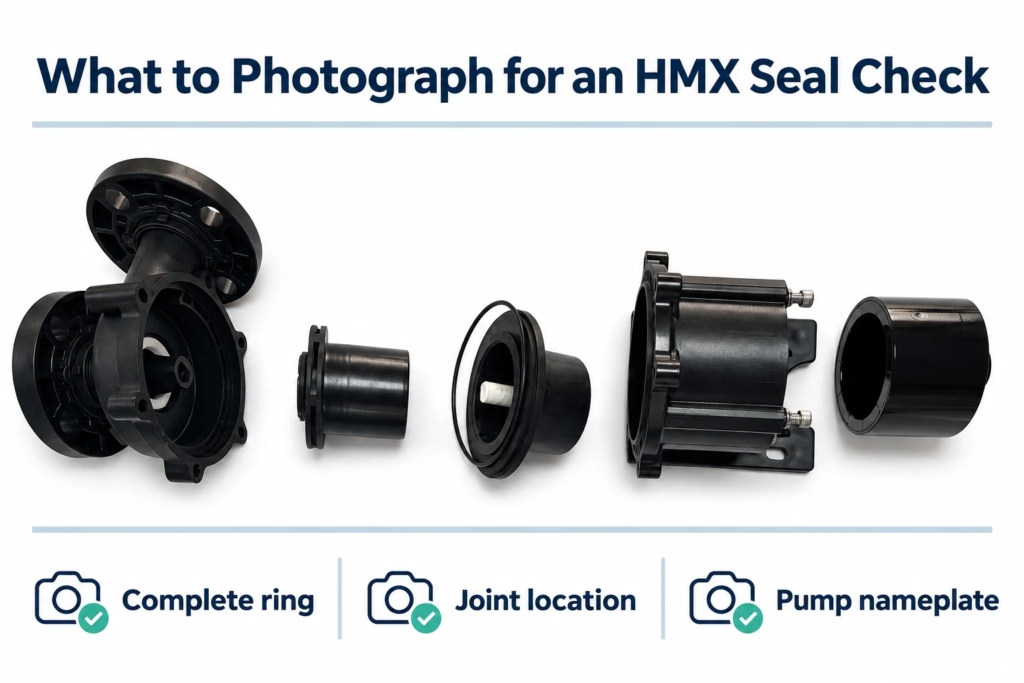
Look at the whole ring and both sealing surfaces. A photograph of one damaged spot can help locate the issue, while a photo of the complete ring and its groove helps establish whether the damage was local or widespread. Parker O-Ring Handbook failure mode guidance
Reconstruct the Exposure Before Ordering Another Seal
A useful maintenance record starts with three points: when the ring was installed, the last time the joint was dry, and when the leak or fit problem first appeared. Add any cleaning cycle, change in bath concentration, higher operating temperature, or recent part substitution between those points.
For example, suppose a replacement ring seated during maintenance, but the joint began to leak after a cleaning cycle. During a subsequent approved inspection, the ring appears enlarged and soft. Compare it with an unused approved ring, confirm which compound was fitted, and record the cleaner’s concentration, temperature, and contact time. If an unused replacement from the same batch also fails the fit check, investigate the part identification and dimensions as well. This example shows how timing can guide the review without assigning the cause from appearance alone.
Before accessing a seal on a chemical pump, follow the site’s isolation and depressurization procedure. Have qualified personnel inspect the joint and handle any parts that may still contain chemical residue.
Check the HMX Model Code and the Exact Seal Position
On a sealless magnetic drive pump, a stationary seal may still be used at a housing joint. When asking about an HMX replacement seal, identify the exact joint and send a photo that shows its position on the pump. That gives the supplier a way to match the request to the appropriate assembly and parts list.
The HENNVI HMX catalog gives HMX-F-44-0-C-C-V-5 as a model-code example. The seventh segment, V, identifies the Viton rubber material option in that example. The catalog lists E for EPDM. The code is useful for checking the specified configuration against the order record. Ask HENNVI to confirm the part number, dimensions, and compound for the specific seal position before ordering. HENNVI HMX model identification
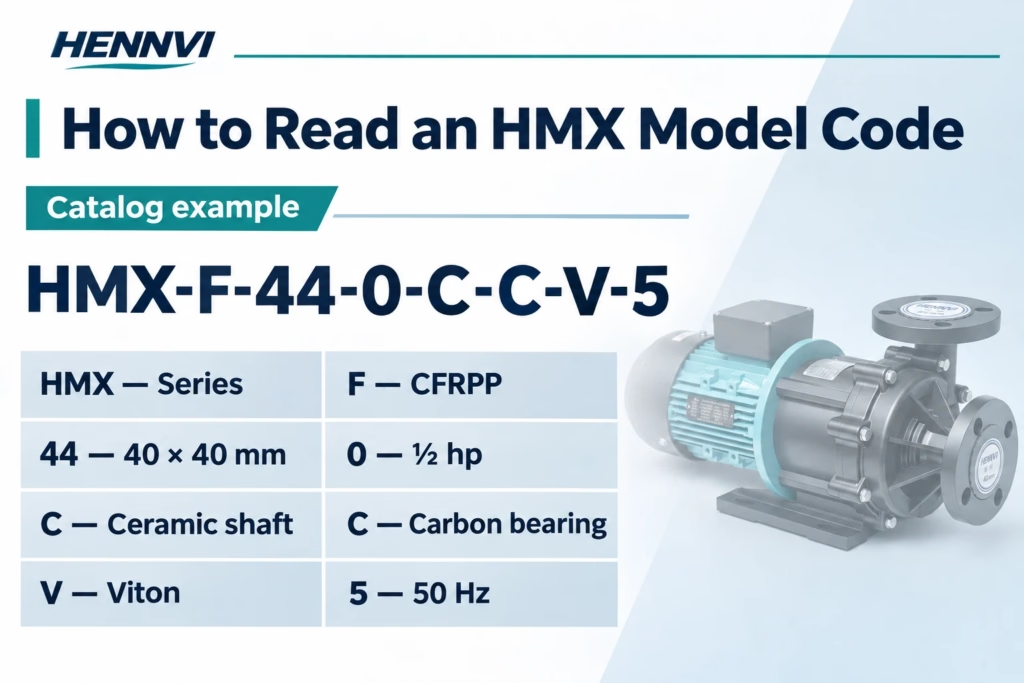
If the pump has been serviced since it was installed, include the most recent spare-part record. The nameplate identifies the pump configuration and the service record helps establish which seal was actually fitted. Review compatibility using the process liquid and the cleaning cycle, including the temperatures and concentrations each seal will encounter. HENNVI guide to selecting a magnetic drive pump for corrosive chemicals
Frequently Asked Questions
Can I use the swollen O-ring to determine the replacement size?
Use the approved part number, drawing, or an unused verified replacement to confirm nominal dimensions. Keep the used ring’s measurements and photos as evidence of how it changed during service.
Can I switch from EPDM to Viton if the original O-ring swelled?
Ask for a compatibility review using the exact compound, process liquid, concentration, temperature, and cleaning conditions. Also confirm the dimensions and seal position. Both the chemical exposure and the fit in the joint matter when choosing a replacement.
What should I send HENNVI to check an HMX seal?
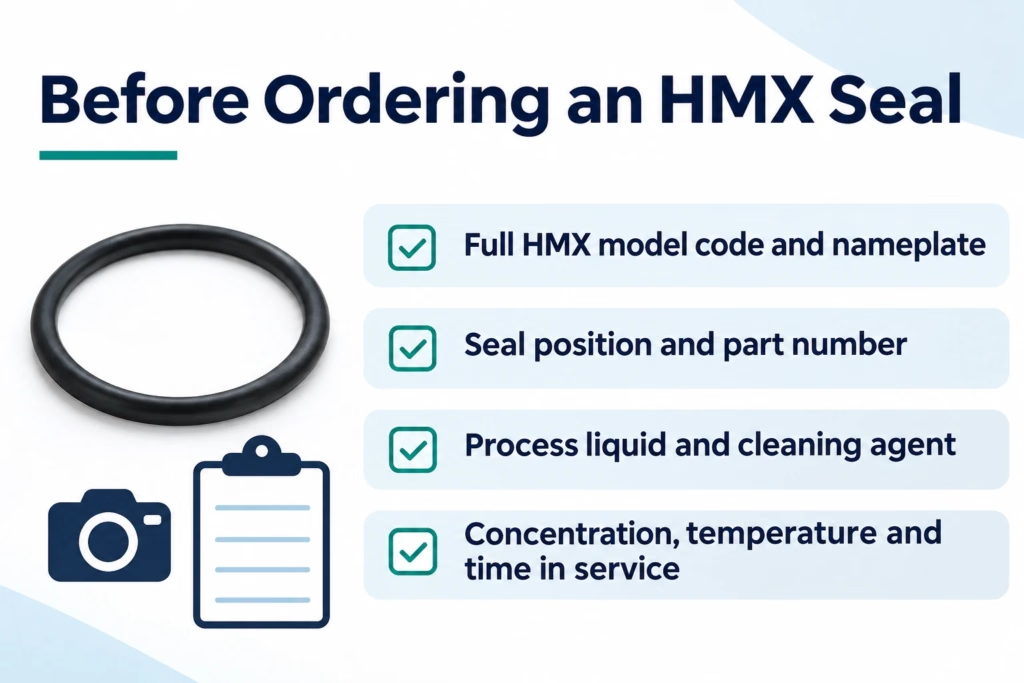
Send the full HMX model code and nameplate photo, a photo of the complete ring and its joint location, and the existing part number or order record if available. Include the process liquid and cleaning agent, concentration, temperature, time in service, and when the problem first appeared. If the last replacement came from a different batch or supplier, include that information in the request. Contact HENNVI about an HMX replacement seal
Need a Reliable Pump Solution for Corrosive Applications?
Hennvi Pump provides engineered chemical pump solutions including magnetic drive pumps, diaphragm pumps,centrifugal pumps, dosing pumps,vertical pumps and filtration systems for industrial applications. Share your working conditions and requirements with us. Our technical team will provide professional suggestions, datasheets and competitive pricing for your fluid‑handling solution.