
Chemical Pumps NPSH Guide: Calculating NPSHa vs. NPSHr
Get Product Catalog & Support
Fill out the form to get full specs and case studies.
Ensuring that your chemical pump operates within its safe hydraulic limits is not only key to preventing catastrophic equipment failure but also a critical factor in the success of industrial chemical processes. Among all hydraulic considerations, Net Positive Suction Head (NPSH) is arguably the most critical yet frequently misunderstood factor. Ignoring NPSH calculations leads directly to pump cavitation—a destructive phenomenon that erodes impellers, destroys mechanical seals, and causes unscheduled plant shutdowns. This comprehensive guide breaks down the physics of NPSH, shows you how to calculate NPSHa versus NPSHr, and provides actionable engineering strategies to keep your operations running smoothly.
Table of Contents
ToggleUnderstanding NPSH Fundamentals in a Chemical Pump System
In chemical processes, understanding the physical principles of NPSH is key to preventing cavitation. This chapter will clarify the distinction between system head (NPSHa) and equipment requirements (NPSHr), and analyze the far-reaching impact of cavitation on the performance of chemical pumps and production efficiency.
What Is NPSH and Why Is It Critical for Chemical Applications?
Net Positive Suction Head (NPSH) represents the absolute pressure available at the pump suction nozzle above the vapor pressure of the pumped liquid. When engineering a pump chemical industry professionals must pay special attention to fluid properties. Unlike water, industrial chemicals often exhibit high volatility, elevated temperatures, or high vapor pressures. If the absolute pressure at the suction eye drops below the liquid’s vapor pressure, the fluid vaporizes instantly, forming micro-bubbles. As these bubbles move into high-pressure zones near the impeller, they collapse violently, causing intense shockwaves that pit metal surfaces and compromise system integrity.
NPSHa vs. NPSHr: Defining the Two Key Variables
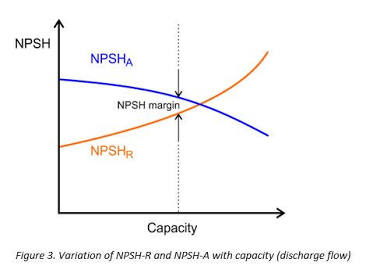
To prevent cavitation, you must balance two distinct values: NPSHa (Available) and NPSHr (Required). NPSHa is determined strictly by your plant’s piping geometry, suction tank pressure, fluid temperature, and friction losses. It represents the pressure the system offers to the chemical pump. Conversely, NPSHr is a fixed property dictated by the pump manufacturer through physical testing; it defines the minimum pressure the pump inlet needs to prevent a 3% drop in total head due to cavitation. The golden rule of pump hydraulic design is simple: NPSHa must always exceed NPSHr by a safe margin.
The Hidden Costs of Cavitation in Chemical Processing
Operating a chemical pump under cavitating conditions inflicts severe physical and financial damage. Beyond the trademark “rattling marbles” noise, cavitation induces extreme hydraulic vibrations that shorten bearing lifespans and crack mechanical seal faces. In corrosive environments, cavitation strips away protective oxide layers on metal components, accelerating chemical erosion—a double-jeopardy effect known as erosion-corrosion. Unplanned seal replacement or impeller failure in hazardous chemical lines can result in severe environmental hazards, safety violations, and tens of thousands of dollars per hour in production losses.
How to Calculate NPSHa vs NPSHr for a Chemical Pump
Translating hydraulic theory into engineering practice requires precise calculations. This chapter will break down the core NPSHa calculation formula in detail, provide a step-by-step demonstration using a real-world scenario involving the transfer of concentrated sulfuric acid, and outline safety margin standards for handling volatile media—all to help you select the right equipment with precision.
The Core NPSHa Formula Breakdown
Calculating available suction head requires assessing every hydraulic variable before the fluid reaches the impeller eye. The universal formula used to determine NPSHa is:
NPSHa =hsp+hs-hfs-hvp
Where:
hsp = Absolute pressure on the liquid surface in the suction vessel (m or ft of liquid)
hs= Static suction head (positive if liquid level is above pump inlet, negative if suction lift)
hfs= Friction and entrance losses in the suction line piping, valves, and fittings
hvp= Vapor pressure of the chemical liquid at operating temperature
Learning how to calculate NPSHa vs NPSHr begins with converting all system pressures (PSIA or Bar) into head (meters or feet) using the specific gravity (SG) of the chemical.
Step-by-Step Calculation Example
Consider a scenario where a chemical pump transfers 98% Concentrated Sulfuric Acid (SG = 1.84) at 20°C from an atmospheric tank (hsp = 10.33 m). The liquid level is 3 meters above the pump inlet ( hs= +3m). Suction piping friction losses are calculated at 1.2 meters (hfs = 1.2m), and the vapor pressure of the acid at this temperature is extremely low, roughly 0.01 meters (hvp = 0.01 m).
Plugging these values into our formula:
NPSHa = 10.33 + 3 – 1.2 – 0.01 = 12.12meters
If the pump manufacturer’s curve specifies an NPSHr of 3.5 meters at your operating duty point, your system margin is 12.12 – 3.5 = 8.62meters. This confirms the system will operate free from cavitation.
Determining Safety Margins for Volatile Chemicals
In clean water systems, a standard safety rule is to maintain NPSHa ≥ NPSHr + 0.5 m (2 ft). However, when dealing with hazardous or volatile fluids in a magnetic drive chemical pump application, a wider safety margin is vital. Volatile hydrocarbons, dissolved gases, or fluids near their boiling point require an NPSH margin of at least 1.0 to 1.5 meters (3.5 to ft), or an NPSHa/NPSHr ratio between 1.2 and 1.5. This buffer protects your chemical pumps against unexpected process upsets, such as tank pressure drops, temperature spikes, or subtle fluid composition changes.
Need a Reliable Pump Solution for Corrosive Applications?
Hennvi Pump provides engineered chemical pump solutions including magnetic drive pumps, diaphragm pumps,centrifugal pumps, dosing pumps,vertical pumps and filtration systems for industrial applications. Share your working conditions and requirements with us. Our technical team will provide professional suggestions, datasheets and competitive pricing for your fluid‑handling solution.
NPSH Considerations for Magnetic Drive Chemical Pump Systems
Due to their unique seal-less design, magnetic drive pumps are extremely susceptible to cavitation. This chapter will analyze the devastating effects of cavitation on magnetic drive pumps and provide practical strategies for increasing the system’s net positive suction head (NPSHa) from two perspectives: optimizing pipeline design and selecting impellers and pre-inducer wheels with low NPSHr values.
Why Mag-Drive Pumps Are Extra Sensitive to Cavitation
Sealless magnetic drive chemical pump designs have become the gold standard for handling toxic, corrosive, or ultra-pure chemicals because they eliminate dynamic mechanical seals. However, their unique design makes them exceptionally vulnerable to NPSH deficiencies. Internal silicon carbide bearings and rear containment shells rely entirely on the pumped liquid for cooling and lubrication. When cavitation occurs, vapor pockets disrupt liquid film lubrication. The resulting dry friction generates rapid localized heating, leading to thermal shock, fractured ceramic bearings, and permanent thermal demagnetization of the magnetic drive coupling.
Below is a comparative breakdown of cavitation risks and failure mechanisms across different chemical pump seal designs:
Pump Type | Sealing Mechanism | Cavitation Risk Level | Primary Failure Mode |
Standard Mechanical Seal Pump | Dynamic Seal Faces (Requires Flush) | Moderate | Seal face heat degradation & dry running |
Magnetic Drive Chemical Pump | Hermetically Sealed (Sealless) | Critical | Rear casing rupture, bearing seizure & demagnetization |
Piping and System Design Strategies to Boost NPSHa
If your initial engineering calculations reveal an inadequate NPSHa, several pipe design adjustments can elevate suction margin for any chemical pump:
Increase Pipe Diameter: Expanding suction piping by one pipe size significantly drops velocity, reducing friction head loss (hfs).
Elevate the Supply Vessel: Raising the suction tank increases static head (hs) directly.
Minimize Suction Fittings: Eliminate unnecessary elbows, check valves, and strainers upstream of the suction flange.
Use Long-Radius Elbows: If turns are required, mandate long-radius elbows installed at least 5 to 10 pipe diameters away from the pump inlet nozzle.
Selecting Low NPSHr Impellers and Inducers
When site space limits suction piping modifications, mechanical equipment changes are necessary. Top chemical pumps manufacturers offer specialized hydraulic options designed for tight $NPSH$ environments. Installing a larger-eye low-NPSH impeller reduces entrance velocities at the suction throat. Alternatively, adding an inducer—a axial-flow helical screw mounted ahead of the main impeller—pre-pressurizes the fluid, lowering the pump’s overall NPSHr by up to 50% without requiring changes to plant elevation.
Partnering with Leading Chemical Pumps Manufacturers for Long-Term Reliability
This chapter focuses on how to enhance system reliability through collaboration with specialized manufacturers. We will analyze methods for ensuring the accuracy of NPSHr data, hydraulic customization strategies for viscous and volatile media, and summarize Hennvi Pump’s engineering and technical services as well as product advantages in the chemical pump sector.
How Quality Manufacturing Ensures Accurate NPSHr Data
Accurate NPSH analysis depends completely on the reliability of the performance curves provided by your equipment supplier. Trusted chemical pumps manufacturers test their pumps in certified hydraulic laboratories according to international standards like ISO 9906 or Hydraulic Institute (HI) 14.6. During factory testing, water flow is throttled until total head drops by 3%, establishing the true NPSHr curve across the entire operating range. Low-tier suppliers often rely on unverified computational simulations, leaving engineers with inaccurate data that increases cavitation risk in real-world chemical lines.
Customizing Chemical Pump Hydraulics for Viscous and Volatile Media
Standard water performance curves provided by a chemical pump vendor must be adjusted when pumping non-water liquids. High fluid viscosity reduces pump efficiency and head while increasing NPSHr. Conversely, when pumping light hydrocarbons or hot water, thermodynamic liquid properties cushion bubble collapse, slightly altering cavitation behavior. Experienced engineering teams analyze your specific process temperature, fluid viscosity, vapor pressure, and chemical compatibility to select tailored metallurgy and optimized impeller trim geometries.
Hennvi Pump: Engineering Superior Fluid Solutions for the Chemical Industry
At Hennvi Pump, we recognize that fluid transfer reliability directly impacts your plant’s bottom line. As specialized chemical pumps manufacturers, we design and produce a comprehensive range of heavy-duty ISO/ANSI centrifugal pumps and sealless magnetic drive chemical pump units engineered for the most demanding applications in the pump chemical industry. Our engineering team provides end-to-end technical support, assisting you with precise NPSH calculations, pipe sizing, and fluid property corrections before equipment selection. Protect your process operations from premature failure—contact Hennvi Pump today to consult with our hydraulic experts and request a customized pump quote.